Examining how informal media, loose communication, and weak boundaries are influencing Jamaica’s football culture.
In football, dysfunction is nothing new. What separates stable programs from unstable ones is not the absence of conflict, but the ability to contain it. Coaches lose dressing rooms, owners fall out with managers, players and coaches clash publicly, and information leaks from within clubs and national setups. That happens everywhere.
The difference is that in healthy environments, those moments do not become the public face of the program. There is enough emotional intelligence, professionalism, and structure in place to stop instability from becoming the story itself.
That is where Jamaican football continues to come up short. The issue is not only what happens behind closed doors. It is how often private business spills beyond those doors.
A Culture Without Clear Boundaries
For years, Jamaican football has been shaped as much by what happens off the pitch as by what happens on it. Concerns about professionalism, emotional intelligence, and stability have not been isolated incidents. They have become recurring features of the environment. And when those qualities are inconsistent at the top, that inconsistency spreads.
The federation sets the tone. If the tone from the top lacks clarity, structure, and accountability, it creates an atmosphere in which the lines between private and public, internal and external, begin to blur. There is no clear example of how people should carry themselves while representing the national program, not in some rigid or artificial way, but in a way that reflects the responsibility of representing the country.
Once that example is missing, standards become harder to define. And when standards lose definition, everything else becomes easier to bend.
Access Without Structure
The rise of independent and informal media in Jamaican football should have been a good thing. More voices, more coverage, more engagement, more discussion. In many ways, that kind of growth is healthy.
But in Jamaica’s case, it has also exposed an existing weakness.
There is a noticeable looseness in how players and coaches engage with these platforms, and at times it goes beyond accessibility and slips into overexposure. National team figures now sit down in informal settings and speak at length about decisions that would normally stay internal. Squad selections are explained in detail, tactical choices are discussed openly, and frustrations are sometimes hinted at, even when not stated directly.
Players have increasingly used similar spaces to respond. They explain situations, address criticism, and offer their own version of decisions that affect them.
Taken one by one, none of these moments may seem especially serious. Taken together, they create a very different image of the program.
When the Program Loses Control of Its Own Story
In a well-run environment, information is managed with intention. Announcements are made officially, messaging is aligned, and internal matters are handled internally. That is not always the reality here.
Too often, conversations that should remain in-house surface in the public domain through indirect and informal channels.
That is not just an abstract concern. It is already visible in the kind of long-form, informal interviews that have become increasingly common in Jamaican football spaces, where coaches, former players, and insiders speak openly on platforms outside official structures, including Jaii Frais’ Let’s Be Honest, Ryan LFC’s Elite Sports TV, and Dicanio Tomlinson’s Gunnaz Media, among many others.
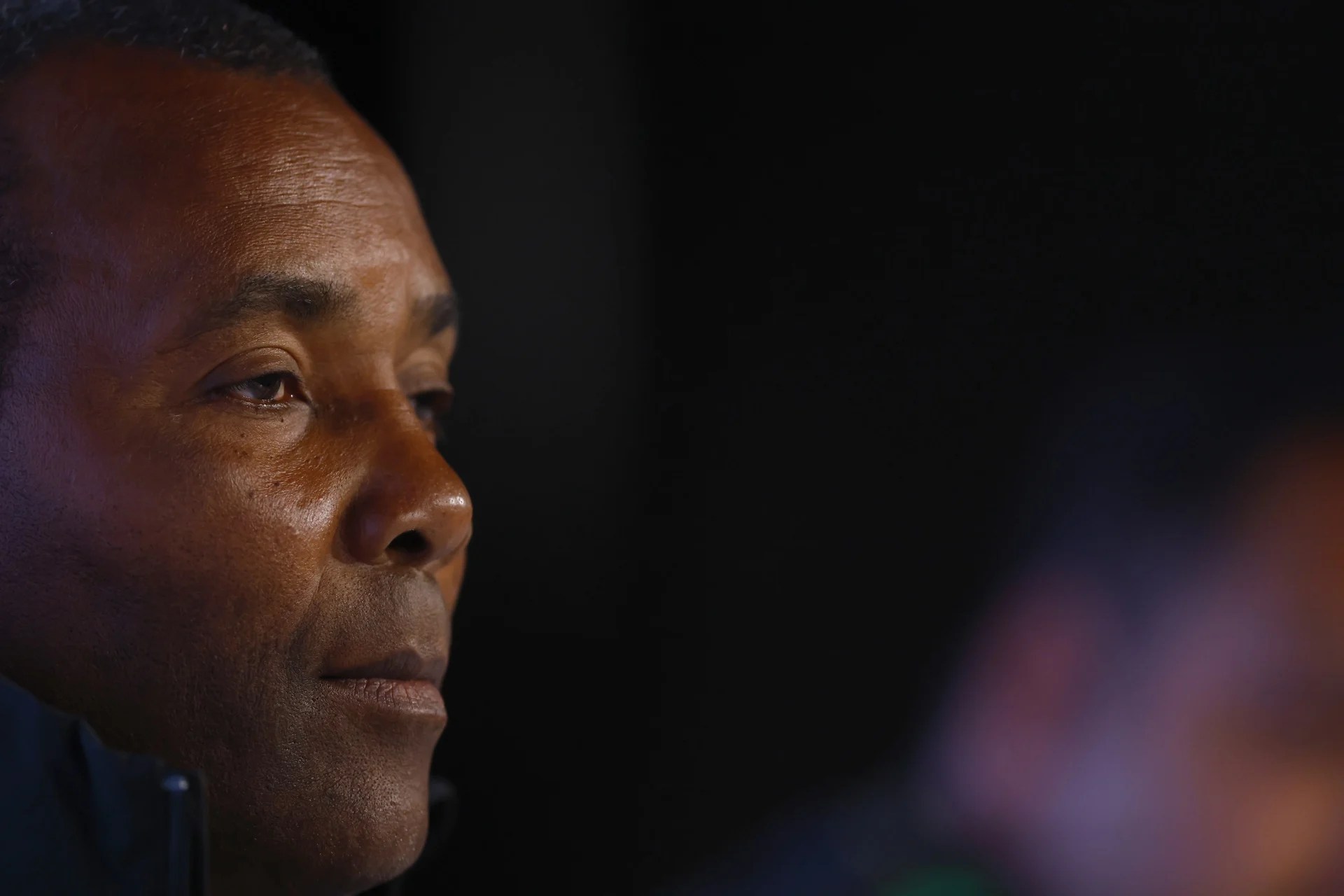
A recent example was Rudolph Speid’s appearance on Gunnaz Media’s YouTube channel, where Jamaica’s senior men’s coach spoke openly about internal decisions, tactical approaches, player relationships, and federation dynamics. Interviews like that can offer insight and access, but they also raise serious questions about tone, accountability, and professionalism. At points, the discussion gave the impression of conflicting accounts, a lack of ownership in certain areas, and a tendency to frame matters in personal terms rather than collective ones.
Even when trying to clarify situations, including saying there was no “beef” with Leon Bailey, the decision to engage with those dynamics in that kind of setting showed just how easily professional boundaries can blur. And when that is considered alongside the long-standing and widely understood strain in his relationship with Craig Butler, those responses can sound disingenuous, whether that was the intention or not.
Some remarks also came across as dismissive, and references to internal matters risked being read in ways that do not reflect modern coaching standards. In particular, comments such as “we didn’t think we should teach professional players how to retain possession” suggested there was no need to reinforce basic principles at the professional level, creating ambiguity and inviting unnecessary public interpretation.
None of that means Leon Bailey should be excused for his own comments. Players can and should be held accountable, especially when they choose to speak publicly. But coaches know better than anyone that while players are judged by fans, coaches are held to a standard too, and often one that is seen as even higher. The reality is simple. Bailey has not performed well enough for Jamaica, and neither has Speid in his role. That is part of what made the timing and setting of the interview feel so questionable.
With Speid’s qualifications, competence, and the lack of transparency around his previous role within the JFF already under scrutiny among many supporters, appearing in that kind of informal setting less than a month after Jamaica missed out on a place at the World Cup felt like the wrong move at the wrong time. Whatever the intention, it gave the impression of a coach speaking from a position that had not yet earned that kind of public latitude.
Once that line is crossed, restoring control becomes far more difficult.
From there, the cycle almost writes itself. A coach speaks, a player reacts, a former player adds context, and informal platforms amplify every layer of it until what started as an internal issue becomes a public narrative.
At that point, the conversation is no longer really about football. It becomes about perception.
The Cost of Constant Exposure
That is where the damage really begins to show.
When internal dynamics are repeatedly played out across informal platforms, authority becomes harder to maintain. Not because it vanishes, but because it is constantly dragged into public spaces where it has to be explained, defended, or interpreted.
The more that happens, the less the program feels like a structured and unified entity. It starts to feel reactive, loose, and overly exposed.
It also raises a deeper question about Jamaican football culture itself. Do we, as a country, and do our players and coaches, sometimes seek validation too openly? There are moments when the urge to explain, defend, or publicly position ourselves seems stronger than the discipline required to let structure, professionalism, and performance speak for themselves.
And that matters, because professionalism is not judged internationally by results alone. It is judged by how a federation communicates, how its representatives conduct themselves, and how clearly it manages the line between internal matters and public messaging.
When a national program begins to look disorganized off the pitch, that image inevitably shapes how it is viewed as a footballing nation more broadly.
Structure, Not Silence
None of this is an argument against independent media. These platforms exist for a reason, and in many ways they have helped Jamaican football by increasing visibility, creating dialogue, and covering parts of the game that more traditional structures often neglect.
The problem is not access itself. The problem is access without standards.
What Jamaican football needs is not silence or restriction. It is direction. Better communication standards, firmer boundaries, and a stronger sense of when, where, and how engagement should happen. More than anything, it requires leadership that consistently models the standard it expects from everyone else. Because culture is not built by statements alone. It is built by behavior.
What This All Comes Back To
Independent media did not create the issues within Jamaican football. But in an environment where structure is already fragile, it has made those issues louder, more visible, and harder to contain.
Until Jamaican football becomes more deliberate about how it communicates, how it protects its internal space, and how it presents itself off the pitch, these same patterns will continue to shape not only internal culture, but outside perception as well.
This is not about silencing voices or singling out creators. It is about recognizing that access without boundaries comes at a cost.
In Jamaican football, access has become easy. The harder question is whether the people who are given that access, and the Jamaican football figures who continue to grant it, fully understand the responsibility that should come with it.
 SHE KNOWS BALL
Leave a comment